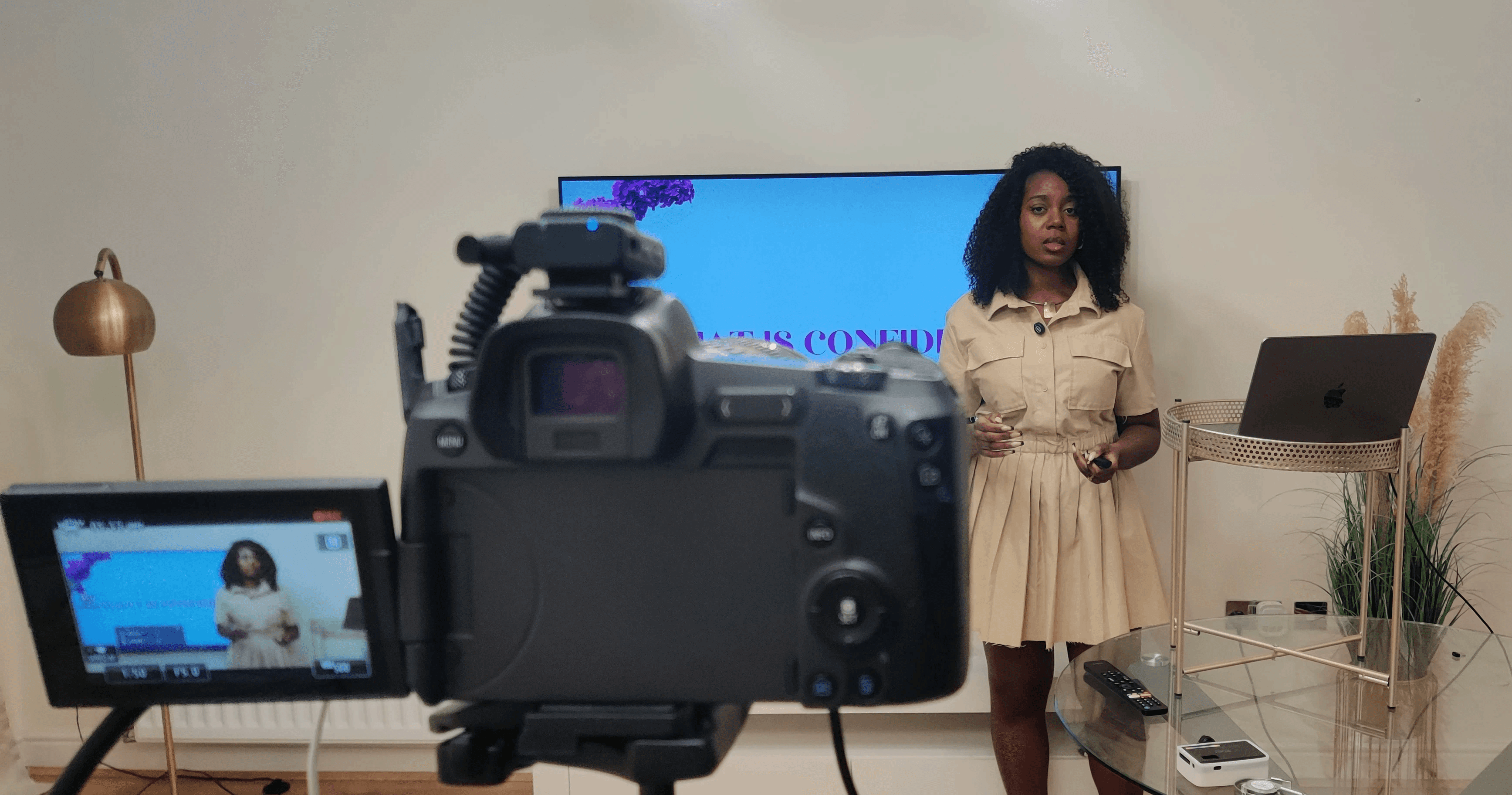
You've spent months building your course. The lessons are planned, the knowledge is there, and you know exactly what you want your students to learn. But turning that knowledge into clear, engaging course material takes time — and that's where content creation for educators becomes valuable.
Then comes the part that can slow everything down: creating the actual content.
You might know your subject inside out but struggle to turn your knowledge into clear, engaging videos. You might also find yourself spending hours recording the same lesson because you don't like how you sound, keep losing your place or feel like you're reading rather than teaching.
So, should you hire someone to create content for your course?
For many course creators, coaches and educators, the answer is yes — especially when creating the content yourself is taking you away from the work you're actually good at.
You don't necessarily need someone to create your ideas for you. You need someone who can help turn what you already know into professional, useful content that sounds like you. That's the approach I take at Create With Pav, helping coaches, speakers, course creators and educators turn their expertise into video content without making the process feel complicated.
The key isn't simply finding someone with a camera. You need someone who understands your ideas, knows how to structure them for video and can help you feel comfortable in front of the camera.
What Does Course Content Creation Actually Involve?
Course content creation covers much more than filming a few lessons.
A professional content creator can help with the process from your initial ideas through to finished videos.
That might include:
Turning your course material into video scripts
Planning what needs to be filmed
Structuring lessons for easier viewing
Directing you while you're on camera
Filming the content
Editing the footage
Adding captions and graphics
Creating shorter clips from longer lessons
Preparing videos for your course platform
The exact process depends on what you're creating.
A coach launching a six-week programme might need a series of teaching videos and promotional content. An educator might need dozens of structured lessons. A consultant could need a smaller collection of expert videos alongside a course.
The right approach starts with the content you already have.
Do You Need Someone to Write Your Course Content?
Not necessarily.
You already know what you teach. You might have years of experience, existing presentations, workshop notes, slide decks, recordings or lessons you've delivered to clients.
You don't need someone to replace your expertise.
You need help turning that expertise into content people can follow.
That's an important difference.
When I work with people who teach for a living, I don't expect them to arrive with a perfect script. We start with what they already know.
I direct and produce ads for people who teach for a living.
You send me your content. I turn it into a script, we film it, I edit it. Most people think they'll have to memorise a load of lines. They don't.
That process works particularly well for people who know their subject but don't enjoy writing scripts or performing them word for word.
When Should You Hire Someone to Create Your Course Content?
There isn't one point where every course creator should hire professional help.
Look at what creating the content is costing you in time, energy and focus.
You're Spending Too Much Time Recording
If a ten-minute lesson takes two hours to record because you're constantly restarting, you're losing time that could be spent improving the course or working with your clients.
A producer who knows how to direct you can keep the process moving.
You can stop, restart a section and carry on without treating every mistake like a failed recording.
Don't Feel Comfortable on Camera
You don't need to be naturally confident on camera.
That's part of the production process.
Some people find that simply having someone in the room who knows how to guide the session makes a noticeable difference. Instead of worrying about whether every delivery is perfect, you can focus on explaining the subject as you would to a real student.
Good direction can help you settle into the session, find a natural rhythm and communicate your ideas without feeling like you're performing.
You're still yourself on camera. You just have someone helping you get there.
You Have Lots of Knowledge but No Clear Structure
Experts sometimes have the opposite problem to beginners.
They know too much.
You might have ten years of experience in your field, which means you can easily go down five different paths when explaining one topic.
A content producer can help you decide what belongs in the lesson, what needs more explanation and what should become a separate piece of content.
Professional Content Creation Isn't About Making You Look Like Someone Else
There's a temptation to make educational content look highly polished.
Good lighting, multiple cameras, graphics and editing all have their place.
But production quality shouldn't get in the way of teaching.
Your students aren't buying your course because you know how to stand in front of a camera. They're buying because you know something they want to learn.
Your personality and expertise should still come through.
That's why I focus on making people sound like themselves rather than making them perform.
The camera isn't the main thing.
The content is.
What Kind of Content Can You Create for a Course?
Once you've decided to bring in professional help, think beyond the main course lessons.
A single filming session can produce several types of useful content.
Course Lessons
These are the core videos students pay for.
They need clear structure, good audio and visuals that support the teaching rather than distract from it.
Promotional Videos
Your course also needs content that explains why someone should take it.
Short videos can introduce the problem your course solves, answer common questions and give potential students a reason to take the next step.
Social Media Content
Short clips from your course material can become posts, Reels or other social content.
You don't necessarily need to film completely separate material for every platform.
Video Ads
If you're promoting a course through paid advertising, you'll need a different type of video.
The ad needs to communicate the right message quickly and give viewers a reason to keep watching or take action.
Personal Brand Content
Your course isn't the only thing people buy from you.
They also buy into your expertise and your way of teaching.
Regular video content can help you build that connection before someone ever considers buying your course.
Why One Filming Session Can Create More Than One Asset
One of the biggest mistakes course creators make is treating every video as a separate production.
You don't have to.
If you're already prepared to film a lesson, you can plan additional content around the same subject.
For example, a course lesson about overcoming a specific problem could also produce:
A short educational clip
A social media Reel
A promotional video
A FAQ video
A course trailer
An advert
The content still comes from your expertise.
You're simply getting more use from the time you spend filming.
I usually batch shoots into several pieces — often 5–15 in a day, depending on the project.
That gives you a bank of finished content rather than one video that needs to carry your entire content strategy.
Making the Filming Process Easier
You don't need to expect every recording session to go perfectly from the start.
A good production process gives you room to adjust your delivery, change wording and take a moment when you need one.
You can:
Try a section again.
Change the wording.
Take a breath and start again.
The goal isn't to make you deliver everything perfectly in one attempt.
It's to create an environment where you can explain your ideas naturally and leave with usable content.
That's one reason I prefer a longer, unhurried solo session.
There's room to settle into the session and focus on teaching rather than worrying about getting everything perfect immediately.
Educational Video Production: What Should You Actually Pay For?
When comparing professional services, don't focus only on the camera or the final visual quality.
Think about the work happening around the camera.
Good educational video production should make your job easier.
Look for support with:
Planning
Someone should understand what you're trying to teach and what content needs to be produced.
Scripting
Your ideas should become clear, usable talking points or scripts without losing your natural voice.
Direction
You should have someone guiding you through the recording instead of being left alone with a camera.
Filming
Good sound, lighting and framing matter, particularly when you're creating a full course.
Editing
The final videos should remove mistakes, pauses and distractions while keeping the teaching clear.
Content Repurposing
Ask whether your long-form course content can also produce shorter videos for your marketing.
Content Creation for Teachers Isn't Just About Recording Lessons
Teachers and educators have a lot of knowledge to communicate.
The challenge is keeping that information accessible on screen.
Content creation for teachers could include recorded lessons, demonstrations, tutorials, educational clips and supporting videos for online learning.
The same principle applies to coaches and consultants.
You don't need to turn every piece of knowledge into a complicated production.
Start with what your audience needs to understand.
Then build the content around that.
Video Content for Educators Should Serve the Student
A polished video isn't automatically a good educational video.
Ask yourself:
Is the lesson easy to follow?
Does it stay focused on one main idea?
Can students pause and return to it easily?
Does the speaker explain concepts clearly?
Are visuals actually helping?
Is the audio easy to hear?
Does the lesson move at a sensible pace?
These questions matter more than having the latest camera equipment.
The production should support the teaching.
Common Mistakes to Avoid
Trying to Memorise Every Word
Memorising a full script can make your delivery sound stiff.
Use a clear script or talking points and focus on communicating the idea.
Recording Everything Yourself
Doing everything alone might save money upfront, but it also puts the planning, filming, lighting, sound, editing and troubleshooting on you.
Consider how much time that actually costs.
Making Every Lesson Too Long
More information doesn't always make a better lesson.
Break large subjects into focused sections so students know what they're learning.
Overproducing the Content
You don't need a huge crew and complicated setup for every course.
A clean, well-directed recording with good sound can be more useful than an elaborate production that distracts from the teaching.
Rushing the Shoot
Give yourself enough time to settle.
The first take doesn't need to be perfect.
Forgetting About Marketing Content
Don't spend weeks creating the course and then realise you have nothing to promote it with.
Plan promotional videos alongside the course content.
How to Choose Someone for Your Course Content
Before hiring a content creator or video production professional, ask practical questions.
Have They Worked With Educators or Experts?
Look for experience with people who need to explain ideas rather than simply appear on camera.
Do They Help With Scripting?
Find out whether you'll need to write everything yourself.
How Do They Handle Nervous Speakers?
If you're uncomfortable on camera, ask how they'll direct you through the process.
Who Handles the Editing?
Know exactly what's included after filming.
Can They Create Different Types of Content?
A good filming session could give you course lessons, marketing videos and shorter social content.
How Many People Will Be on the Shoot?
A smaller setup might suit you better if you need time to relax and find your rhythm.
Can You See Their Previous Work?
Look at the quality of the teaching and delivery, not just the visuals.
How I Help Turn Existing Knowledge Into Video
My work sits between your expertise and the finished content.
You bring the knowledge.
I help turn it into something you can deliver naturally on camera.
That might mean working from course notes, existing presentations, voice notes or ideas you've already been teaching.
I handle the scripting, direction, filming and editing.
The same approach can also be used for promotional content, video ads, personal brand videos and other content around your course.
If you're an educator, coach, speaker or expert, you shouldn't have to become a filmmaker just because you want to teach online.
What Clients Say
“I have been working with Pav for years and he also became a good friend of mine. That says a lot about the quality of the person he is.”
— Andy Harrington, NY Times Best Selling Author
“He guides you, directs you, gives you ideas and advice. I didn’t need to memorise the whole script. Pav makes the whole process extremely easy.”
— Lisa Phillips, Salon Owner
“Working with Pav has been an absolute delight, particularly when creating the adverts.”
— Dene Stuart, Business Coach
“If you’re looking for somebody to help you with videos for your business, Pav is your man!”
— Ruth Driscoll, Toxic Relationship Expert
People Also Ask
Should I hire someone to create content for my online course?
If creating the content yourself is taking too much time or you're uncomfortable on camera, professional help can make the process much easier. You can keep control of your expertise while getting support with scripting, filming, direction and editing.
How much does course content creation cost?
The cost depends on the amount of content, filming time, locations, scripting, editing and production involved. Ask for a clear breakdown of what's included rather than comparing the headline price alone.
Do I need a script for my course videos?
A script can help keep lessons focused, but you don't need to memorise it word for word. Clear talking points or a conversational script can help you explain your ideas naturally while keeping the lesson on track.
Can one video shoot create content for my course and social media?
Yes. With proper planning, the same subject can produce course lessons, short educational clips, promotional videos, Reels and other marketing content. This lets you get more useful material from the same filming session.
What makes good educational video production?
Good educational video production combines clear teaching with good sound, lighting, editing and direction. The technology should support the lesson rather than distract from it.
Is professional video production worth it for a course creator?
It can be worthwhile when filming and editing are taking you away from your core work. Professional support also helps when you need consistent quality, multiple videos or content that feels natural on camera.
Can I create course videos if I'm nervous on camera?
Yes. You don't need to be naturally confident on camera. Good direction, a sensible script and enough time to warm up can make the process much easier.
Final Thoughts
You don't need to handle every part of your course yourself.
Your job is to teach. You know the subject, understand your audience and have the experience your students are paying for.
A professional content creator can help turn that knowledge into clear, useful video without asking you to become a filmmaker or memorise pages of lines.
For coaches, speakers, educators and course creators, content creation for educators is about more than recording lessons. It's about building a useful library of content that teaches your audience and supports your business.
If you've already got the ideas, notes, slides or course material, you don't need to start from scratch.
Send me what you're working with, and I'll help turn it into content that's ready to use.
Get in touch:
info@createwithpav.com
About the Author
I'm Pav. I make ads, content and videos for people who teach for a living — coaches, speakers, course creators and educators. I handle the scripting, direction, filming and editing, so you can sound natural on camera and turn ideas you already have into content that's ready to use.
Tell me what you’re making or the event you’re running — I’ll take it from there.
Start a conversation